

First-Class Travel Habits That Make Every Trip Better
How to create comfort, calm and polish in any cabin—one intentional detail at a time
First-class travel is not only a seat at the front of the plane. It is the feeling that your body is supported, your essentials are within reach, your documents are in order and nothing about the journey requires unnecessary scrambling. In other words, it is a system.
You can sit in first class and still spend the flight cold, thirsty and searching for your charger. You can also sit in economy with a soft blanket, good coffee, a properly supported neck and a carry-on arranged so intelligently that the trip feels calm from boarding to baggage claim. The cabin matters. Your habits matter more.
After travelling extensively—and travelling with chronic illness—I have learned that comfort is rarely created by one grand gesture. It is built through small, repeatable decisions. These are the first-class travel habits that make every trip better for me.
Quick Answer: What Makes Travel Feel First Class?
The quickest way to make any flight feel first class is to prepare for comfort before you board: support your neck, carry warmth, organise your bag in the order you will use it, keep medication immediately accessible, hydrate, dress comfortably and choose travel pieces that work together. Luxury is not clutter. It is having the right thing at the right moment.
1. Build a Travel Comfort Set You Genuinely Love
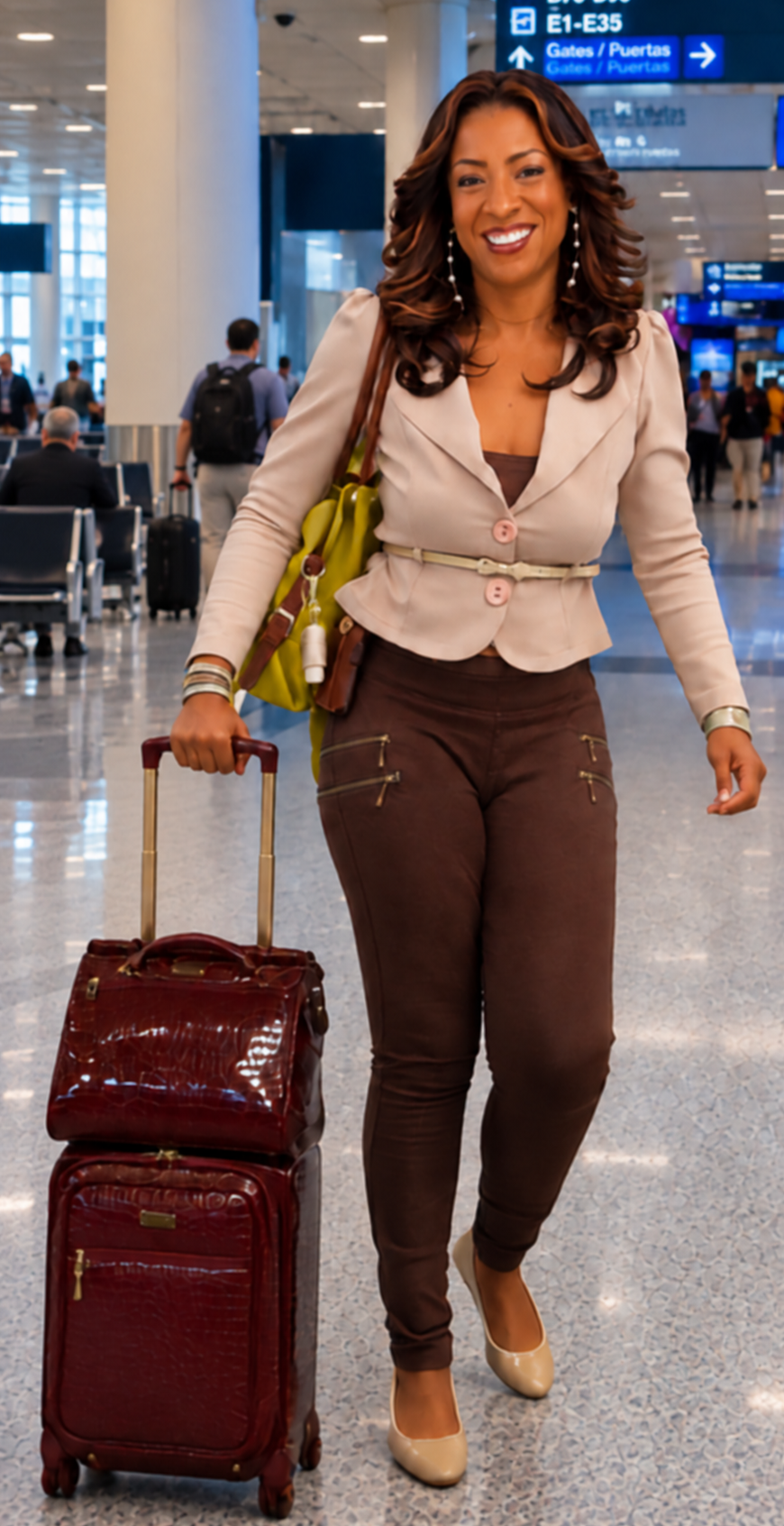
My travel set is coordinated in deep burgundy and rich brown tones. My Samantha Brown luggage, pillow, blanket, placemat and smaller accessories look as though they belong together. That is not essential for the plane to move, obviously, but it changes how I feel while moving through the airport.
A polished travel set also reduces visual clutter. I know what belongs to me, I notice quickly when something is missing and I arrive looking organised rather than overburdened. I have had travel agents and flight attendants stop to ask about my set. On other trips, my husband and I have been guided through priority lines or received unexpected upgrades – small courtesies that may have been influenced by the polished way we travel and the quality of our luggage. I cannot promise that coordinated luggage will change your booking—airline and hotel decisions follow their own policies, but presentation can shape the first impression you make.
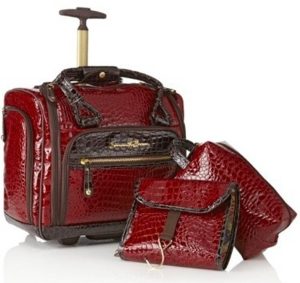
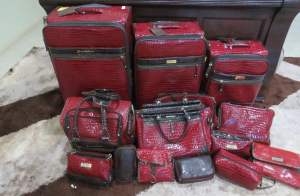
Choose a palette, repeat it across the pieces you use most and keep the system practical. Chic and useful should be travel companions, not competitors. This is Lived Luxury: comfort that also looks considered.

2. Carry Your Own Warmth
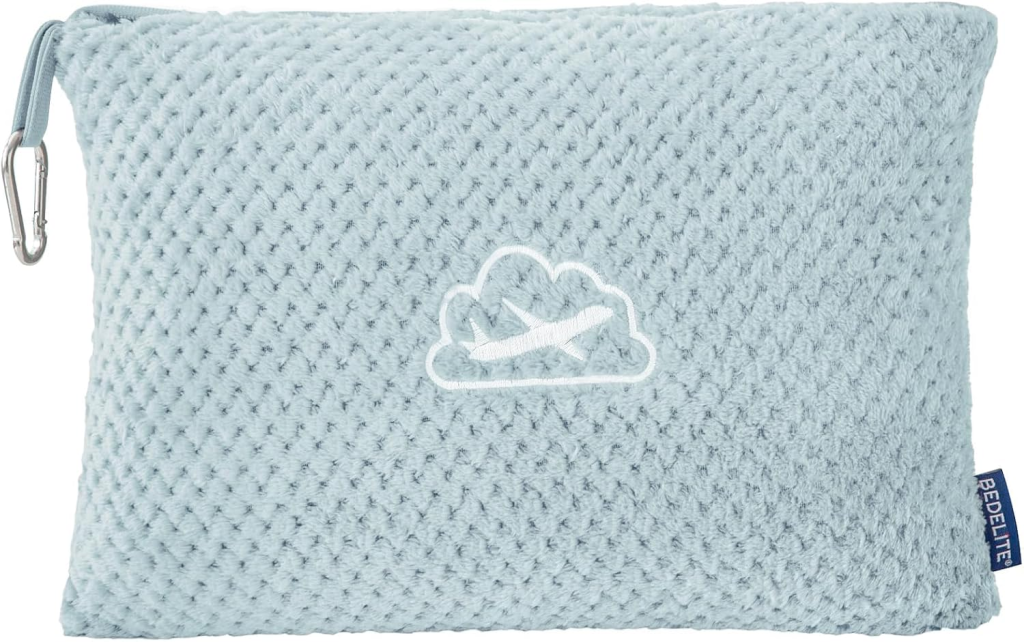
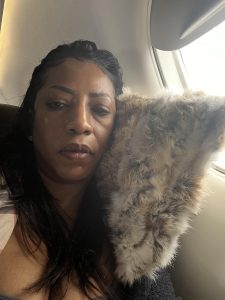
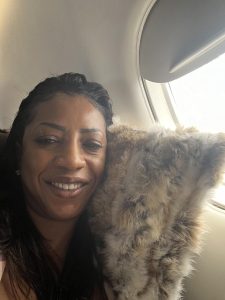
Aircraft cabins can feel cold, and the thin blanket offered onboard may not give you the softness or reassurance you want. I prefer to carry my own warm, fluffy throw. Some purpose-made travel blankets fold neatly into a pouch, but you can also adapt a beautiful home throw. I once divided a soft throw into two smaller blankets so it packed easily without losing the cosy feel I loved.
My blanket folds behind my pillow under an elastic strap, creating one compact travel bundle. It is a simple arrangement, but once I settle into my seat it feels like a small corner of home.
Shop note:
3. Support Your Neck Before It Starts Complaining
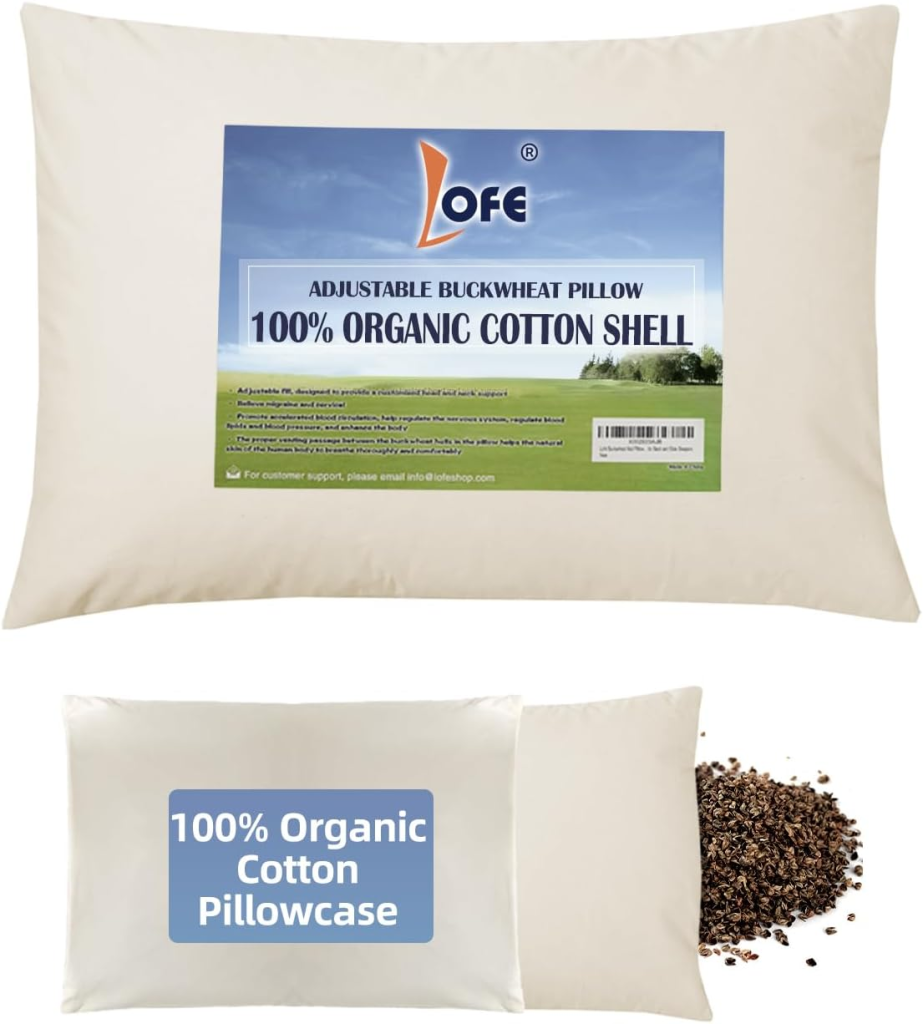
I go nowhere without my buckwheat pillow. I use it on flights, car journeys and overnight stays because the filling adjusts to the shape of my neck and gives me firmer, more targeted support than many soft travel pillows. That matters to any traveller trying to avoid waking with a stiff neck; with my chronic illness and cervical pain, it is essential.
The best travel neck pillow is not necessarily the one trending online. It is the one that supports your posture, fits your body and can be carried without becoming another bulky problem. If you have an existing neck or spinal condition, ask your own clinician what positioning is appropriate for you.
My travel essential:
4. Organise Your Carry-On in the Order You Will Use It
A beautifully packed bag is useful only if you can retrieve what you need in two seconds. I pack by sequence, not simply by category. If the carry-on is going under the seat, the items I need first sit closest to my feet.
My settling-in routine is almost automatic:
- Take out the wipe and clean the tray table, armrest and the surfaces I will touch.
- Place my coordinated placemat on the tray table.
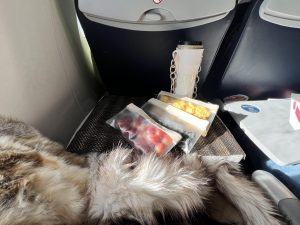
- Set out my water, coffee, snack pouch and headphones.
- Position my pillow and blanket.
- Keep medication and comfort tools in the most accessible pocket.
This is one of the most useful first-class travel habits because it removes friction. You are not rustling through six pouches while everyone else is trying to board. You sit down, establish your little corner and exhale.
5. Make Snacks Feel Like Part of the Experience
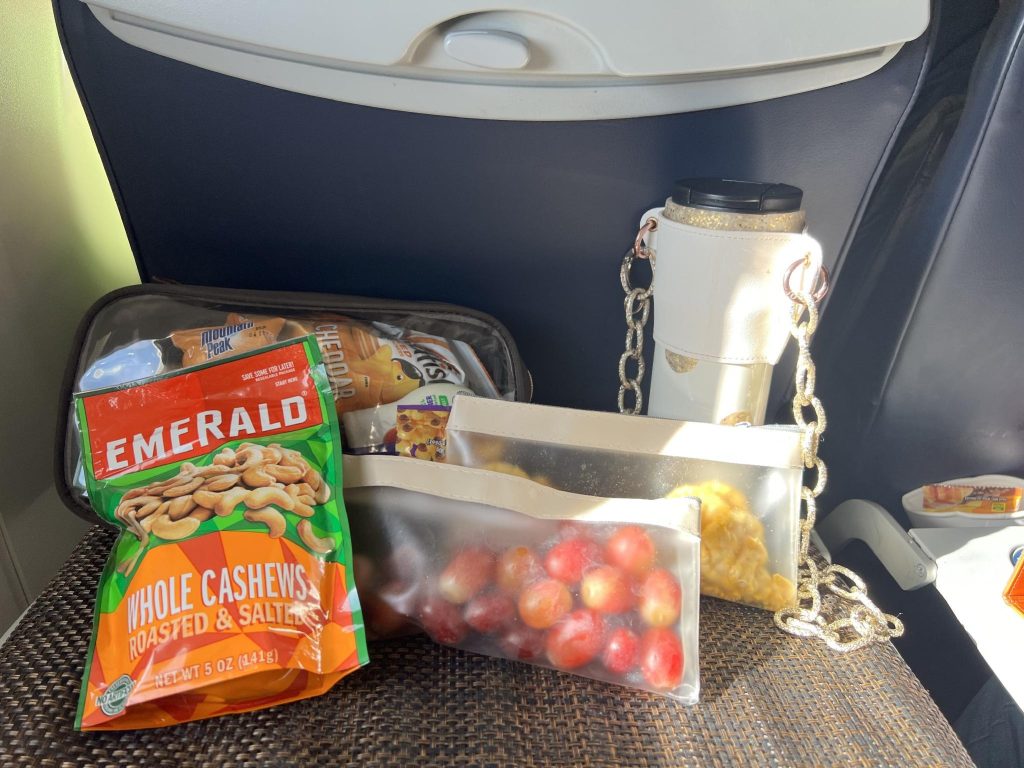
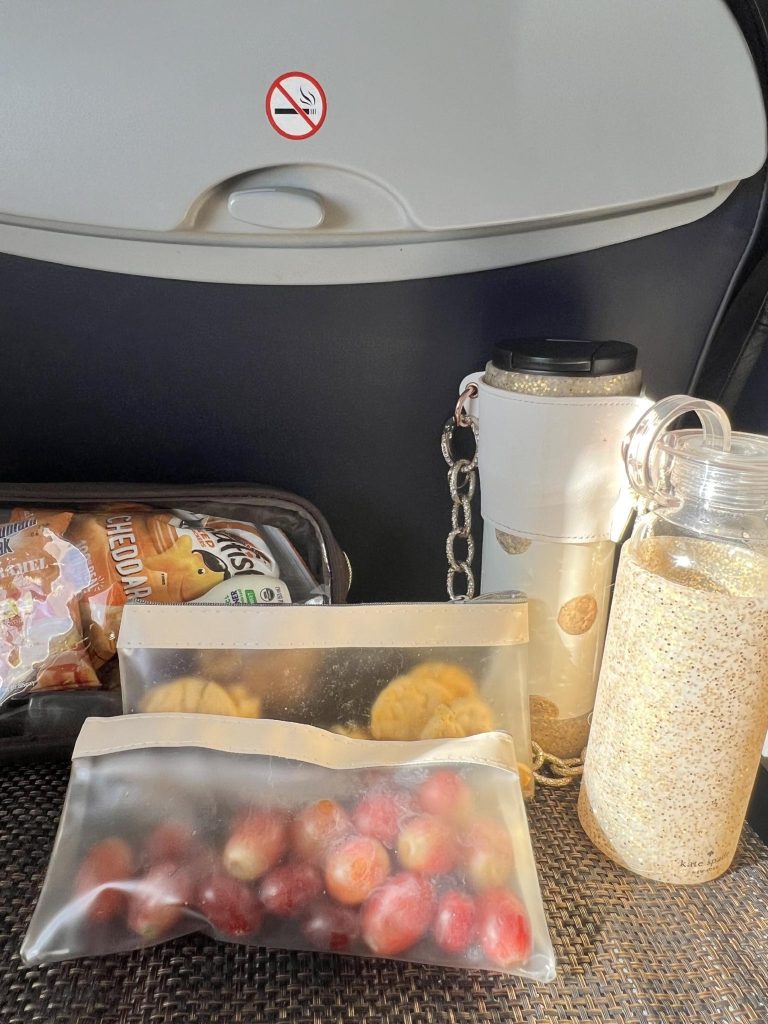
Carry snacks you know your body tolerates: nuts, fruit, ginger chews or whatever works for you. But presentation matters to me, even in a carry-on. I use clear resealable pouches with a gold or beige detail rather than throwing everything into an old plastic bag. I also carry a compact cutlery set with a knife, fork, spoon and chopsticks, plus napkins, wet wipes and mints.
None of this is about performing luxury for other passengers. It is about treating yourself well when nobody is staging the moment for you. A one-hour flight still deserves dignity. So does a twelve-hour one.
6. Hydrate Before the Trolley Decides Your Schedule
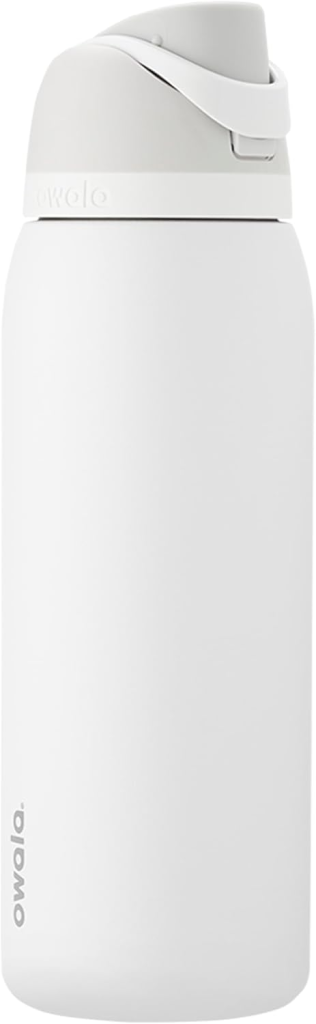
Carry an empty reusable water bottle through security, then fill it after the checkpoint or ask the cabin crew if they are able to fill it onboard. I usually carry both a water bottle and a travel coffee mug, along with my three-in-one coffee. While the cabin is still settling, I can arrange my water, coffee and nuts and begin the journey comfortably.
For U.S. screening, the TSA liquids rule applies to liquids carried through the checkpoint, so take the bottle through empty and refill it afterwards. Rules and water availability vary by airport and airline, so check your departure airport before you travel.
Shop my pick:
7. Use Compression Socks Thoughtfully on Longer Journeys
Compression socks can help some travellers manage swelling and may be recommended for certain people at increased risk of travel-related blood clots. They are not a universal prescription. The CDC travel guidance advises travellers with additional risk factors to speak with a healthcare professional about compression stockings or medication before departure. Movement still matters: flex your feet, tighten and release your leg muscles, and walk when it is safe to do so.
If you use compression socks, choose the correct size and compression level rather than assuming tighter is better—especially if you have circulation problems, diabetes, neuropathy or another relevant condition.
8. Create a Two-Second Medication System
When you travel with chronic illness, the smallest delay can become a very large problem. I keep essential medication in the same accessible place every time. My personal kit may include Advil liquid gels, a very small Coca-Cola, ginger chews and a small antihistamine because nausea, migraines and unexpected reactions are part of my reality. Your kit should reflect your diagnoses, prescriptions and clinician’s advice—not mine.
While it is advisable to keep medicine in original labelled packaging where practical, I ask my pharmacist for an extra label and stick those labels it on my medicine case so it looks nice. Ensure you bring enough for delays and carry a written medication list. For travel through the United States, TSA permits medically necessary liquids in reasonable quantities above the standard limit, but they must be declared for screening; review the TSA medical screening guidance before departure. Other countries have their own rules, and some medicines that are legal at home may be restricted abroad.
Medical note: This article shares personal travel habits and general information. It is not medical advice. Discuss compression, medication, mobility and pain-management needs with an appropriate healthcare professional.
9. Carry Comfort Technology—Safely
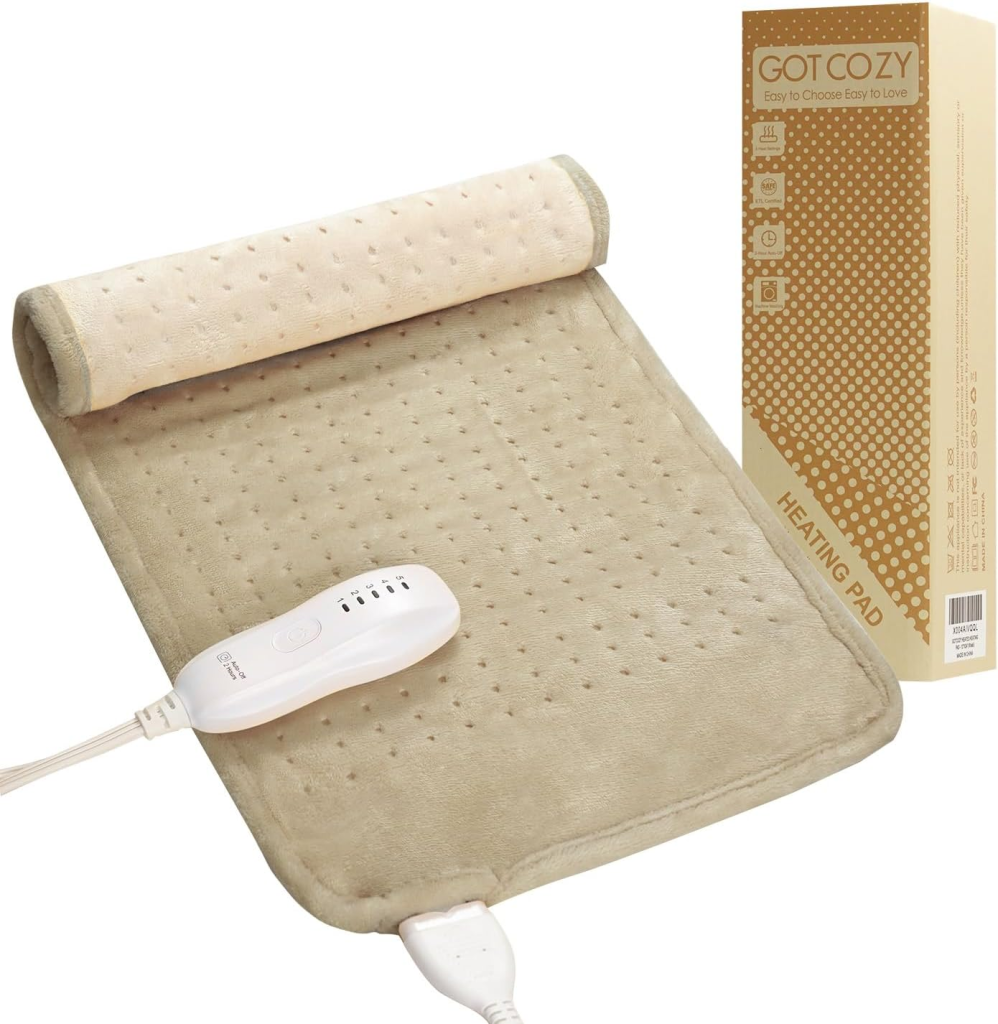
I travel with compact heat tools because warmth can feel like a hug when shoulder or lower-spine pain starts. One heat pack is cordless and discreet under my clothes. Another heats almost immediately and connects to an external battery. That fast access can make the difference between managing discomfort early and spending the rest of the flight chasing it.
Battery-powered comfort tools require a safety check before you leave home. The FAA battery guidance says spare lithium batteries and power banks must be carried in the cabin, not checked baggage, with watt-hour limits and airline-specific restrictions. Confirm that your heating device is permitted by your airline, protect it from accidental activation and never use a damaged or recalled battery.
Related product:
10. Pack for the Possibility That Your Suitcase Takes Its Own Holiday
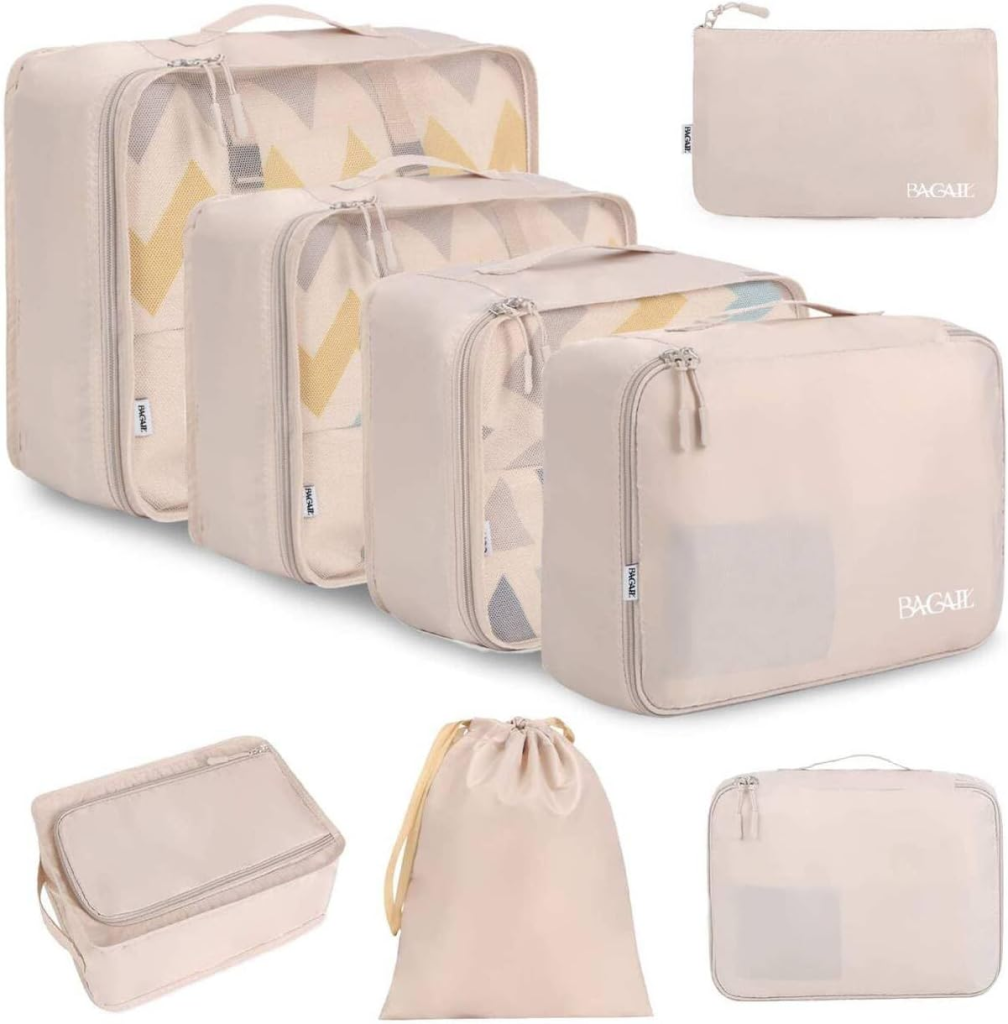
Packing cubes make the contents of your luggage visible, sortable and much easier to repack. More importantly, they help you create a small delay-proof capsule in your carry-on. Include at least one complete change of clothes, nightwear, underwear, essential toiletries and whatever you need to manage your hair and medication for the first day.
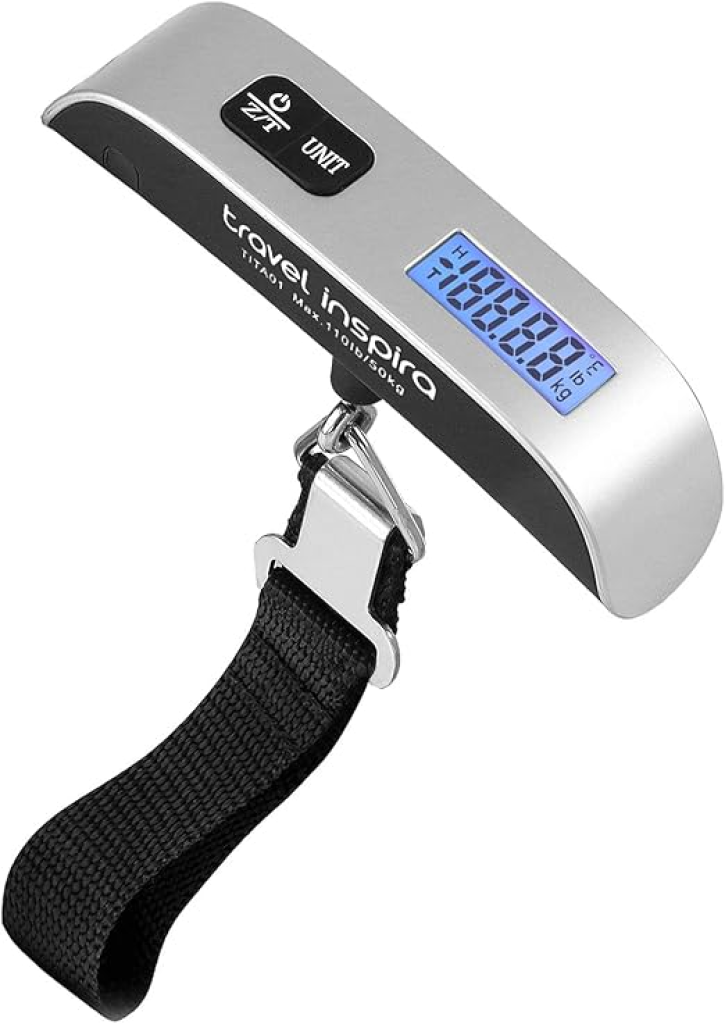
Use a separate lower compartment or waterproof pouch for shoes, a raincoat and an umbrella. Keep a luggage scale at home—or in an outside pocket—so you can check the bag before the airport counter delivers its financial critique.
Shop notes:
11. Give Your Passport and Documents a Permanent Home
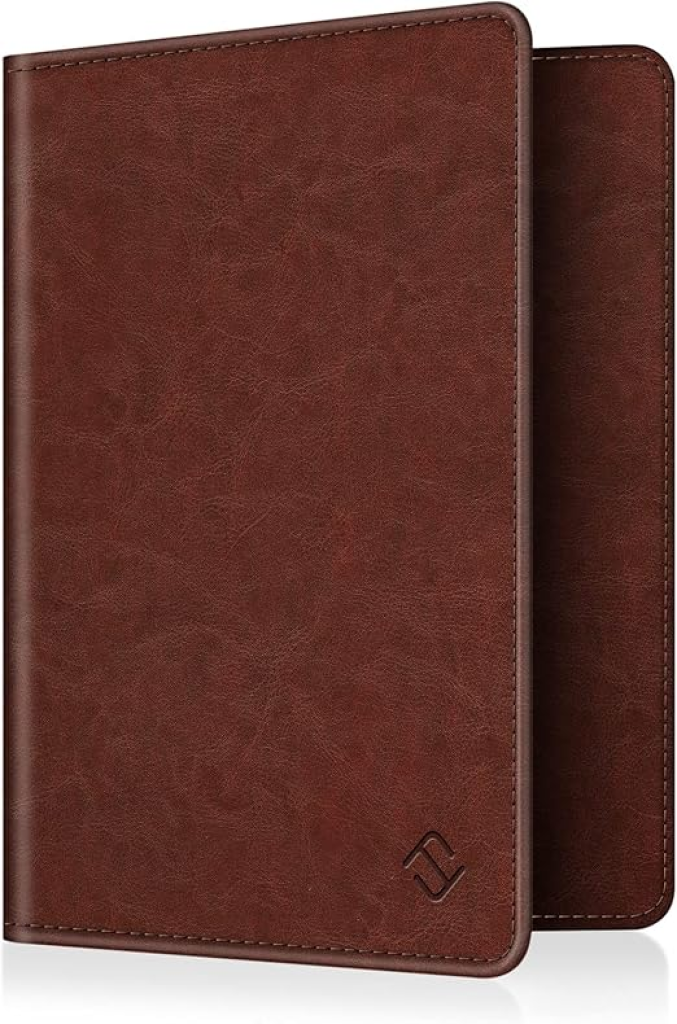
Use one distinctive passport holder or travel wallet for passports, boarding documents, insurance information and printed confirmations. An RFID-blocking design can be an optional feature, but good document discipline is the bigger win: keep the wallet zipped, do not leave it unattended and return every document to the same place after use.
I love having everything on my phone, but technology should have a paper understudy. Print the address and telephone number for your accommodation, key booking details and emergency contacts—especially when you are travelling somewhere you do not speak the language. A flat battery, broken phone or immigration form is an unimpressed audience for “but it was in the app.”
Shop note:
12. Protect Your Entertainment and Your Power
Download your films, books, playlists and destination information before leaving home. Carry wired or charged headphones, the correct cables, a universal adapter where needed and a compliant power bank. Do not assume your seat outlet will exist—or work. Your charger is part of your comfort plan, not a last-minute scavenger hunt.
13. Dress for Movement, Temperature and Arrival
Wear polished clothes that let you bend your knees, shift position, curl up in your seat and layer up or down. A well-made comfortable sneaker, soft trousers and a cardigan or wrap can look intentional without restricting you. Moisturise your skin before and during the flight if that suits you, use a face mist within applicable liquid limits and protect textured or fragile hair with extra moisture and a low-friction style.
The goal is not to look as though you tried too hard. It is to arrive feeling like yourself.
14. Use Loyalty Strategically—Without Financing the Fantasy
If your credit card earns travel rewards, route ordinary, budgeted expenses through it and pay the balance in full and on time. Compare annual fees, interest, redemption rules and the value of the benefits you actually use. Miles are helpful; high-interest debt is not a luxury upgrade.
When booking, compare the total price of business class with the cost of an economy or premium-economy ticket plus any later cash or points upgrade offer. Sometimes the latter is better value; sometimes it is not.
Elite status can improve upgrade priority, but complimentary upgrades depend on route, availability, fare class and airline rules. Treat an upgrade as a benefit, not a business plan.
The First-Class Standard Is Preparedness
The real secret is not pretending economy is first class. It is refusing to surrender your comfort, order and self-respect to the class of ticket you bought.
A soft blanket, supportive pillow, clean placemat, organised snacks, accessible medicine, hydrated skin, charged entertainment and luggage that makes you smile: these are small things. Together, they create an experience that feels calm, elevated and yours.
That is the heart of For A Better Me™: designing real life so it supports you. Explore more travel-in-comfort articles, browse Healing Rituals for gentle recovery support, read my healing rituals for chronic pain or discover the Chali-A coaching experience when you are ready to design a life that works better beyond the boarding gate.
Because first class, at its best, is not excess. It is ease—planned in advance.
First-Class Travel Essentials Checklist
- Travel neck pillow
- Compression socks
- Passport holder / travel wallet
- Packing cubes
- Travel blanket
- Digital luggage scale
- Insulated water bottle
- Compact heating pad
- Medication pouch and printed medication list
- Placemat, wipes, cutlery and snack pouch
- Chargers, adapter and compliant power bank
Browse more curated finds in the Chali-A Amazon Storefront.First-Class Travel Essentials Checklist
Frequently Asked Questions
What are the best first-class travel habits?
Prepare for warmth, neck support, hydration, clean surfaces, organised snacks, accessible medication, charged entertainment and a carry-on packed in the order you will use it. These habits improve the journey in any cabin.
What should I keep in my carry-on for a long flight?
Keep travel documents, medication, one change of clothes, toiletries, a water bottle, snacks, chargers, headphones, a pillow, a blanket and any clinician-approved comfort tools in your carry-on. Check security and airline restrictions before travel.
Are compression socks necessary for flying?
Not for everyone. Some travellers use them for swelling or on medical advice, while people with certain risk factors should discuss them with a healthcare professional. Correct sizing and compression level matter.
How can I make an economy seat feel more luxurious?
Create a compact comfort set, wipe and organise your space, add a soft blanket and supportive pillow, bring attractive snack containers, hydrate and keep everything you need within easy reach. Ease—not excess—is what makes the seat feel elevated.
How should I organise medication when flying?
Keep essential medication accessible, consistently placed and clearly labelled. Carry a medication list and enough supply for possible delays, and verify the destination country’s rules as well as your departure-screening requirements.






This was a good read. I must adapt some of these things